Is Flutter the Best Choice for Cross-Platform App Development?
Category:: Mobile Development

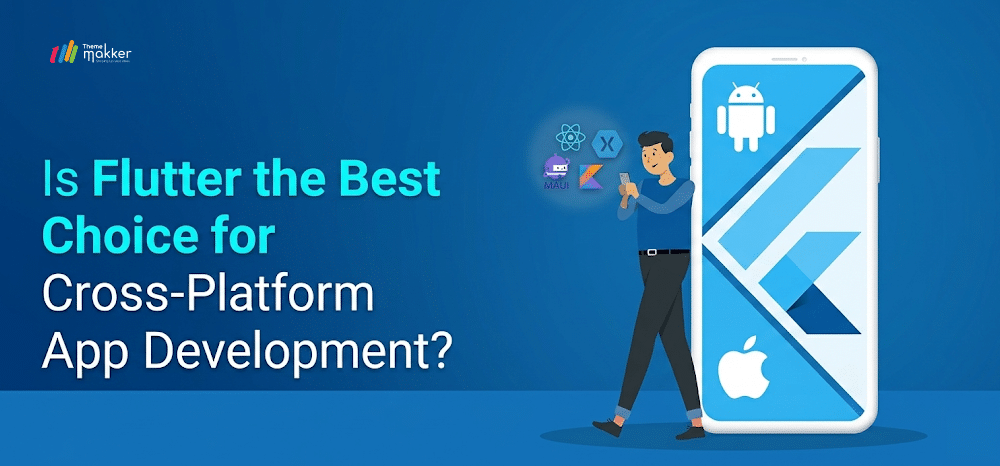
Mobile apps continue to shape how businesses connect with users, and the demand for faster and cost-effective solutions has never been higher. This is where cross-platform app development has become a preferred approach, allowing companies to build apps for multiple platforms using a single codebase.
Among cross-platform app development frameworks, Flutter has remained ahead even in 2026. Its ability to deliver high-performance apps with a smooth user experience makes it a strong choice for businesses of all sizes.
In this blog, we will explore what Flutter is, how it works, and why it continues to lead the market. You will also learn its benefits, use cases, and when it may not be the right fit.
What is Flutter and How Does it Work?
Flutter is an open-source framework created by Google that helps developers build mobile, web, and desktop applications from a single codebase. It uses the Dart programming language and comes with a rich set of prebuilt components that make app design easier and faster.
Unlike many other cross-platform app development tools, Flutter does not rely on native components. Instead, it uses its own rendering engine to draw every element on the screen. This gives developers full control over design and performance.
Flutter compiles code directly into native machine code, ensuring faster execution and smoother animations. This approach makes it ideal for app development cross-platform strategies where consistency and speed matter. Developers can also test and update apps quickly using features like hot reload, improving productivity.
Why Choose Flutter Over React Native?
Both Flutter and React Native are popular choices for cross-platform mobile app development, but Flutter has gained a clear advantage in recent years. One of the main reasons is performance.
-
Flutter apps are compiled into native code, which results in faster load times and smoother performance compared to React Native.
-
Another key difference lies in design flexibility. Flutter allows developers to create custom user interfaces without relying on platform-specific components. This ensures a consistent look and feel across devices, which is often harder to achieve with React Native.
-
Flutter also offers better development speed. Features like hot reload allow developers to see changes instantly, making the development process more efficient. This is especially useful for businesses looking to build apps quickly using cross-platform app development approaches.
-
In addition, Flutter has strong community support and continuous updates from Google. Compared with other cross-platform app development frameworks, it offers a more comprehensive and reliable ecosystem. This makes it a preferred choice for businesses aiming for long-term scalability.
Benefits of Using Flutter for Cross-Platform App Development
Choosing the right path for cross-platform app development can be the difference between a successful launch and a technical nightmare.
Flutter provides a unique blend of speed and quality that is hard to match with other cross-platform app development frameworks. Here are five key reasons why it leads the pack:
-
Rapid Development Cycles: The hot reload feature lets developers see code changes instantly, without restarting the app. This makes the building process incredibly fast and encourages experimentation.
-
Single Codebase: You only need to write the code once to deploy it on iOS, Android, the web, and even desktop platforms. This significantly reduces the workload for engineering teams.
-
Expressive UI: The level of customization available is unparalleled. You can create brand-specific designs that go far beyond the standard look of mobile operating systems.
-
Strong Community Support: With millions of developers using it, finding solutions to problems or hiring talent is easier than ever in 2026.
-
High Performance: Because it avoids the JavaScript bridge, its execution speed is nearly identical to that of apps built with platform-specific languages like Swift or Kotlin.
Popular Use Cases of Flutter
Flutter is used across various industries due to its flexibility and performance. One common use case is e-commerce apps, where businesses need fast, responsive interfaces to improve the user experience. Flutter helps deliver smooth navigation and engaging designs.
Another popular use case is fintech applications. With its ability to handle complex data and provide secure interactions, Flutter is well-suited for finance-related apps.
Healthcare apps also benefit from Flutter’s capabilities. It enables developers to create reliable, user-friendly applications for patient management and telemedicine.
In addition, many startups use Flutter to build MVPs quickly. Since it supports cross-platform mobile app development, businesses can launch apps on both Android and iOS without doubling their effort. This makes it a practical choice for companies aiming to scale.
Why Startups Need to Choose Flutter for Cross-Platform Apps in 2026?
Startups often face challenges such as limited budgets, tight timelines, and the need to validate ideas quickly. Flutter addresses all these challenges effectively. By using a single codebase, startups can reduce development costs and launch their products faster.
Flutter also helps startups maintain consistency across platforms. This is important for building a strong brand identity and delivering a seamless user experience.
Another advantage is scalability. As startups grow, they need apps that can handle increasing user demands. Flutter’s performance and flexibility make it suitable for long-term growth.
Working with a reliable cross-platform app development company can further enhance the results. Such companies use Flutter to build robust and scalable applications tailored to business needs.
In 2026, startups are focusing more on efficiency and speed. Flutter supports this by simplifying the development process and reducing time to market. Among various cross-platform app development frameworks, it remains one of the most practical and future-ready solutions.
When Not to Use Flutter for App Development?
While Flutter is a powerful framework, it may not be the right choice for every project. For example, apps that rely heavily on platform-specific features may face limitations. In such cases, native development might be more suitable.
Flutter may also not be ideal for very simple apps where performance is not a priority. Using it in such scenarios could add unnecessary complexity.
Another situation is when a business already has an existing native app and wants minor updates. Switching to Flutter may not be cost-effective.
It is important to evaluate project requirements before choosing any framework. Although Flutter works well for most cross-platform app development needs, understanding its limitations helps ensure better decision-making.
Conclusion
Flutter continues to stand out as a leading framework in 2026 due to its performance, flexibility, and ease of use. It has transformed how businesses approach cross-platform app development by offering faster development and consistent user experiences.
In this blog, we explored what Flutter is, how it works, and why it is preferred over other tools. We also looked at its benefits, use cases, and situations where it may not be the best choice.
For businesses looking to build scalable and efficient apps, Flutter remains a reliable option. Partnering with an experienced cross-platform app development company can help you make the most of this technology.
If you are planning to build modern mobile applications, Thememakker a Flutter App Development Company offers expert services to help you create high-quality and future-ready apps. Connect today and start your app development journey today.

Frequently Asked Questions
-
Q:: What is cross-platform app development?
A:: Cross-platform app development is the process of creating applications that work on multiple platforms using a single codebase. It helps reduce development time, cost, and effort while ensuring consistency across different devices and operating systems.
-
Q:: Why is cross-platform app development the future?
A:: It allows businesses to reach a wider audience with less effort and cost. As demand for faster development grows, this approach helps companies build and launch apps quickly without compromising on performance or user experience.
-
Q:: What are the benefits of cross-platform app development?
A:: It reduces development costs, speeds up the process, and ensures consistent performance across platforms. Businesses can maintain a single codebase, making updates easier and improving efficiency while delivering a seamless user experience.
-
Q:: What is the difference between cross-platform and hybrid app development?
A:: Cross-platform apps use a single codebase to create near native apps, while hybrid apps rely on web technologies within a native container. Cross-platform apps generally offer better performance and user experience compared to hybrid solutions.
-
Q:: How to develop cross-platform apps?
A:: Start by choosing the right framework, like Flutter, define your app requirements, design the interface, and develop using a single codebase. Testing across platforms ensures performance and consistency before launching the app to users.
Recommended Posts
97.9%
Projects Delivered On-Time

5,000+
Creatives & Agencies Trust Us.

Development Service?
We can provide at affordable price.


Awwwards, Design Nominees, CSSLight, Best CSS and more





THEMEFOREST
Exclusive Author
Boost Backend Efficiency with Cutting-Edge Web Technologies
Accelerate your backend development with our premium admin dashboard templates powered by today’s top frameworks and libraries—Bootstrap, Tailwind CSS, React, Vue.js, Angular, Laravel, Node.js, WordPress, Next.js, ASP.NET, and more. Whether you're building a SaaS platform, CRM, or internal tool, our dashboards offer clean design, modular code, and full responsiveness to help you build faster and smarter.